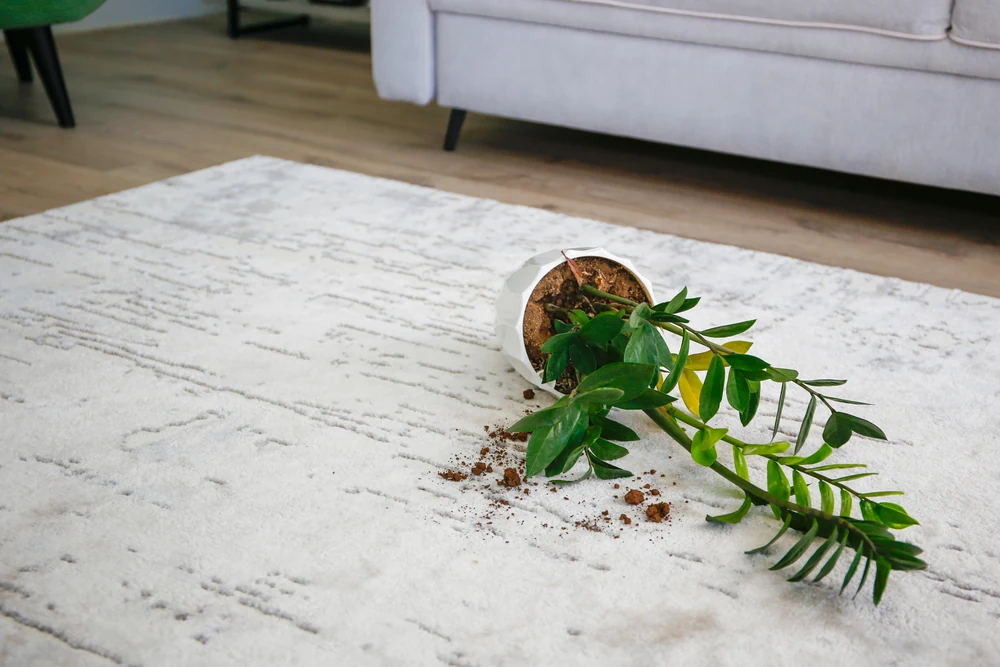
Low-Moisture vs Steam Cleaning: Which Is Right for Birmingham? — illustrated photo. Photo for editorial context; LocalPro Carpet Cleaning Birmingham.
If you’ve researched carpet cleaning at all, you’ve encountered “steam cleaning” and “low-moisture” as the two competing approaches. The marketing makes it sound like a coin-flip, but for Birmingham specifically, the answer is much clearer than the internet would have you believe. Here’s an honest side-by-side comparison from a cleaner that uses both methods (and chooses one of them about 95% of the time).
What is steam cleaning, exactly?
“Steam cleaning” is the consumer name for what the industry calls hot-water extraction (HWE). The process: a high-pressure pump injects hot water and detergent into the carpet, then a powerful vacuum immediately extracts as much as possible.
It’s the most common method in the U.S. — most truck-mount systems use it, and almost every chain franchise (Stanley, Chem-Dry’s hot-carbonating variant, Zerorez, etc.) is a steam-cleaning variation. When done well by a skilled tech with a powerful truck-mount, it cleans deeply.
Typical water usage: about 0.5–1 gallon per 100 sq ft. Typical dry time in Birmingham humidity: 12–48 hours.
What is low-moisture cleaning?
Low-moisture cleaning (also called Very Low Moisture / VLM) uses about 1/10 the water of hot-water extraction. The chemistry is different — specialized hypoallergenic, CRI-approved solutions that suspend and lift soil instead of flushing it out.
The cleaning pass uses a counter-rotating cleaning head that agitates and extracts simultaneously. Done well, it removes the same depth of soil as steam cleaning, but with about 1 hour of dry time instead of 12+.
★★★★★“Switched from a steam-cleaning company that left my carpet wet for 2 days. LocalPro’s low-moisture dries fast and stays clean longer. Night and day.”
PMPatricia M.Vestavia Hills, AL · Verified Customer
Side-by-side comparison
| Factor | Hot-Water Extraction (Steam) | Low-Moisture (LocalPro Method) |
|---|---|---|
| Dry time | 12–48 hours (worse in humidity) | ~1 hour |
| Water usage | High (~10x more) | Low |
| Cleaning depth | Excellent | Excellent (same) |
| Mildew risk in pad | Real in Birmingham humidity | Effectively none |
| Soap residue | Common (causes re-soiling) | None (CRI-approved chemistry) |
| Wicking stains | Common with old pet/wine stains | Rare |
| Walkable when? | After 12+ hours | Immediately |
| Price (3-room) | ~$129–$179 typical | $109 (LocalPro) |
Why does dry time matter so much in Birmingham?
This is the single biggest reason we use low-moisture for Birmingham residential cleaning. Three problems stack:
- Mildew growth window. Mold and mildew germinate when pad moisture exceeds about 60% relative humidity for more than ~24 hours. Birmingham summer indoor humidity can sit at 60%+ for days. Steam-cleaned carpet that takes 24–48 hours to dry hits this window every time.
- Wicking stains. Buried stains in the pad get re-dissolved by steam cleaning’s water volume. As the carpet slowly dries, capillary action wicks them back to the surface — the “stain reappearance” problem. Low-moisture cleaning doesn’t introduce enough water to cause this.
- Lifestyle disruption. “Don’t walk on the carpet for 36 hours” is a real ask in a working family home. Pets, kids, mail delivery — everyone’s in and out.
See our dry-time guide and humidity guide for more.
When is steam cleaning the right choice?
We’re not anti-steam — we use it ourselves in specific situations. It’s the right choice for:
- Heavy commercial soil. Restaurant floors, daycare centers, restoration after construction. The flushing action of high water volume removes embedded soil low-moisture chemistry can’t reach.
- Smoke or fire damage restoration. Hot water and high pressure flush combustion residues that bind to fibers chemically.
- Heavy mold remediation. Sometimes a deep flush is needed.
- Some commercial carpet types (Berber blends in heavy-traffic offices) where the manufacturer specifies HWE.
For the typical Birmingham residential job — a clean home with normal soil, occasional spills, maybe pets — low-moisture is the better fit and the math works out for the homeowner: faster dry time, no mildew risk, no soap residue, lower long-term cost because you’re not re-cleaning to fix wicking stains.
What about “hot carbonating extraction” (Chem-Dry)?
Chem-Dry’s process is a hybrid — closer to low-moisture than full hot-water extraction. They use carbonated chemistry that suspends soil with less water than HWE but more than pure VLM. Dry times are typically 4–8 hours, which is better than full steam but slower than our process.
Quality varies a lot by franchise. Some Chem-Dry operators do excellent work; others use the same low-effort upsell approach as bait-pricing competitors. If you’re choosing between them and us, ask the same questions we list in our dry-time guide — the answers will tell you what you need to know.
What about portable steam cleaners (consumer machines)?
The Bissell, Hoover, and Rug Doctor machines you can rent from the grocery store are nominally hot-water extraction, but with a fraction of the suction power. The result: they put a lot of water into the carpet (sometimes more than truck-mount, proportionally) but extract relatively little. Dry times can stretch to 72+ hours in Birmingham humidity.
Plus, consumer detergent leaves significant residue, which we discuss in our DIY vs pro guide. If you’ve already rented one, the salvage move is to run plain water through twice after to extract residue.
Will low-moisture cleaning get out heavy stains?
Yes — same depth as steam cleaning. The misconception is that “more water = deeper clean.” It’s not true. Cleaning depth is determined by chemistry quality, dwell time, agitation, and extraction efficiency. Low-moisture beats steam on extraction efficiency (less water in = less to pull back out), and good chemistry plus dwell time handles the chemical heavy lifting.
The exceptions: red clay stains older than a couple weeks (we use an iron-reducer regardless of method), pet pad-soaked accidents (no surface method works for those), and heavy commercial soil.
So what should I book?
For most Birmingham residential cleaning: low-moisture. For specific situations (smoke damage, heavy commercial, certain restoration scenarios): hot-water extraction. We do both — and we’ll tell you straight which one your job needs when you call.
Key Takeaways
The bottom line.
- Steam cleaning uses ~10x more water than low-moisture cleaning.
- Birmingham summer humidity means steam-cleaned carpet often hits the 24-hour mildew growth window in pad.
- Both methods clean to the same depth when done by skilled techs.
- Low-moisture cleaning leaves no soap residue; steam cleaning often does (causes re-soiling).
- Steam is right for heavy commercial soil, smoke restoration, and certain Berber blends; low-moisture is right for typical residential work in our climate.