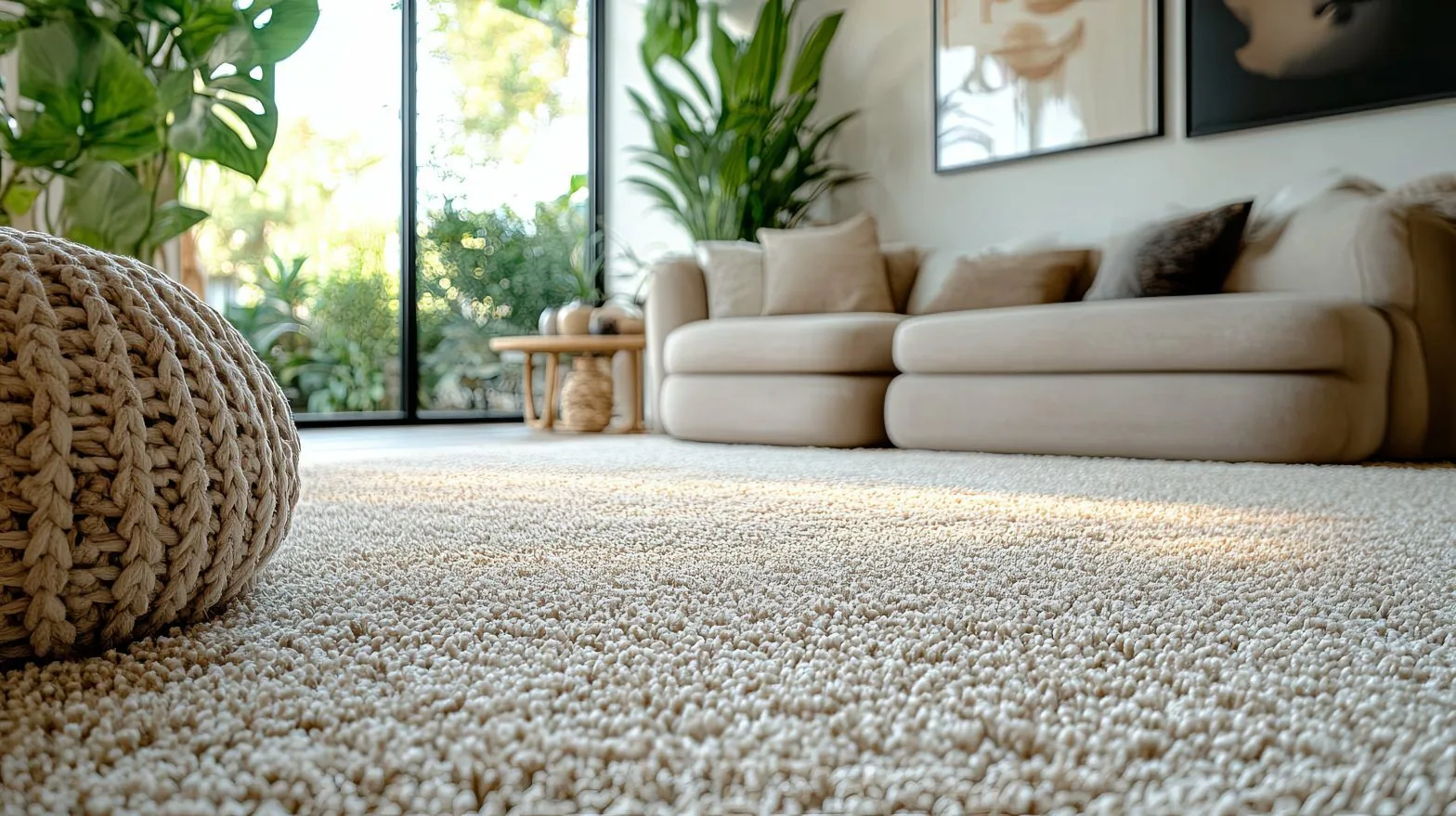
Spring Pollen Carpet Checklist for Birmingham Homes — illustrated photo. Photo for editorial context; LocalPro Carpet Cleaning Birmingham.
From mid-March through late May, Birmingham’s tree pollen turns cars yellow, makes eyes itch, and lands relentlessly in your carpet. We see a clear seasonal pattern in our call volume — allergy-related cleaning requests roughly triple from February to April. Here’s the 7-step checklist that keeps your home livable through pollen season.
What kinds of pollen are worst in Birmingham, and when?
Three peaks stack up over six weeks:
- Mid-March to early April: Maple, elm, and pine pollen. Pine especially is visible — yellow dust on cars, decks, and windowsills.
- Early to mid-April: Oak pollen — the biggest spike. Oaks are everywhere in Mountain Brook, Vestavia, and across the older Birmingham neighborhoods.
- Late April to mid-May: Birch, hickory, and grass pollens take over.
The National Allergy Bureau tracks daily pollen counts. Birmingham regularly hits “very high” levels (above 1,500 grains/m³) during oak peak.
Step 1: Block pollen at the door before March hits
This is your biggest leverage. By the first warm day, you should have:
- An outdoor walk-off mat at every exterior door.
- An indoor mat just inside each door — different texture so it catches what the outdoor one misses.
- A spot for shoes (basket, bench, or rack) right by the entry.
- An open conversation with the household about wiping shoes and removing them indoors during pollen season.
Studies cited by the Carpet & Rug Institute show entry mats catch up to 80% of incoming particulates. For pollen specifically, the biggest miss is when the outdoor mat is dirty or the indoor mat is too small. Replace or wash mats every couple weeks during peak.
★★★★★“February anti-allergen treatment changed my spring. Don’t know why I waited so long.”
ARAisha R.Mountain Brook, AL · Verified Customer
Step 2: Tighten up your HVAC filter
Replace your HVAC filter at the start of pollen season with the highest-MERV filter your system can handle (usually MERV 11 or 13 for modern systems). Don’t push beyond what your system is rated for — restricted airflow makes things worse, not better.
If you have severe pollen allergies, consider a portable HEPA air purifier in the bedroom. Run it 24/7 during pollen season.
Step 3: Vacuum 3x a week — with HEPA filtration
Standard vacuums exhaust fine particulates back into your air, including pollen. A HEPA-filtered bagged vacuum traps them. Vacuum living areas and bedrooms 3x a week through pollen season — slow passes, with attention to the entries, traffic lanes, and around the bottoms of curtains.
Step 4: Wash bedding and curtains weekly
Bedding accumulates pollen from your skin, hair, and pets. Wash sheets, pillowcases, and pillow protectors weekly in 130°F+ water.
Curtains and drapes accumulate too — they sit in air currents and catch airborne particles. Wash machine-washable curtains once during pollen season; have heavier ones professionally cleaned.
Step 5: Don’t open windows during peak pollen
It’s tempting on a 70°F April day, but pollen counts can spike to “extreme” within minutes. Check the daily forecast (Birmingham National Weather Service publishes it) and keep windows closed when counts are high. Run AC instead — it filters and dehumidifies.
For Birmingham’s older homes (especially in Homewood and Mountain Brook), check window seals and door weatherstripping. Even closed-window homes leak air; tightening up reduces infiltration.
Step 6: Schedule an anti-allergen carpet treatment
Late February or very early March is the sweet spot — before tree pollen peaks, but after winter dust mites have built up. Anti-allergen treatment uses a tannic-acid denaturing agent that breaks down the protein structure of allergens (pollen, dust mite, pet dander) so the body’s immune system no longer recognizes them.
It’s not a perfume — it doesn’t mask, it deactivates. Effective for 4–6 months under typical conditions, which puts the next treatment around September/October just in time for ragweed.
See our allergy treatment service. For households with severe allergies, we recommend three treatments a year (February, June, October).
Step 7: After the worst of pollen, do a deep clean
Late May into early June, do a real reset:
- Vacuum every soft surface in the house, including upholstery and the back of curtains.
- Wash all washable bedding, throws, and pet beds in hot water.
- Wipe baseboards, window sills, and the tops of door trim — pollen settles here.
- Schedule professional carpet and upholstery cleaning. The post-pollen window is one of the most common scheduling spikes we see.
- Replace HVAC filter (it’s been working overtime).
What about pets in pollen season?
Pets bring pollen in on their fur and paws. During peak weeks:
- Wipe paws when they come inside — a damp microfiber cloth or pet-safe wipe.
- Brush daily outdoors (don’t bring the brushed pollen back in).
- Bath weekly with a pet-safe shampoo if symptoms are severe.
- Keep pets out of the bedroom if possible — protects your 8 hours of sleep from constant exposure.
How fast does pollen go from “tracked in” to “in the carpet pad”?
About 24–48 hours of normal foot traffic. After that, the particles work their way down through the pile and lodge near the base — where vacuums struggle to reach them. That’s the layer professional deep-cleaning targets.
From our field experience: of the homes we deep-clean in June (post-pollen), the average pollen-load reduction is significant — by visual extraction (yellow tinge in the wastewater) plus measurable reduction in symptoms reported by customers in follow-up.
Key Takeaways
The bottom line.
- Mid-March to late May: tree pollen peaks in Birmingham — oak especially.
- Entry mats inside AND outside, plus shoes off indoors, blocks up to 80% of incoming pollen.
- Vacuum 3x weekly during pollen season with a HEPA-filtered bagged vacuum.
- Anti-allergen carpet treatment scheduled in late February prevents the worst of pollen-related symptoms.
- After Memorial Day, do a full deep clean — including upholstery and curtains.